
Stellar Spins verification, account rules and mobile access
 Available in US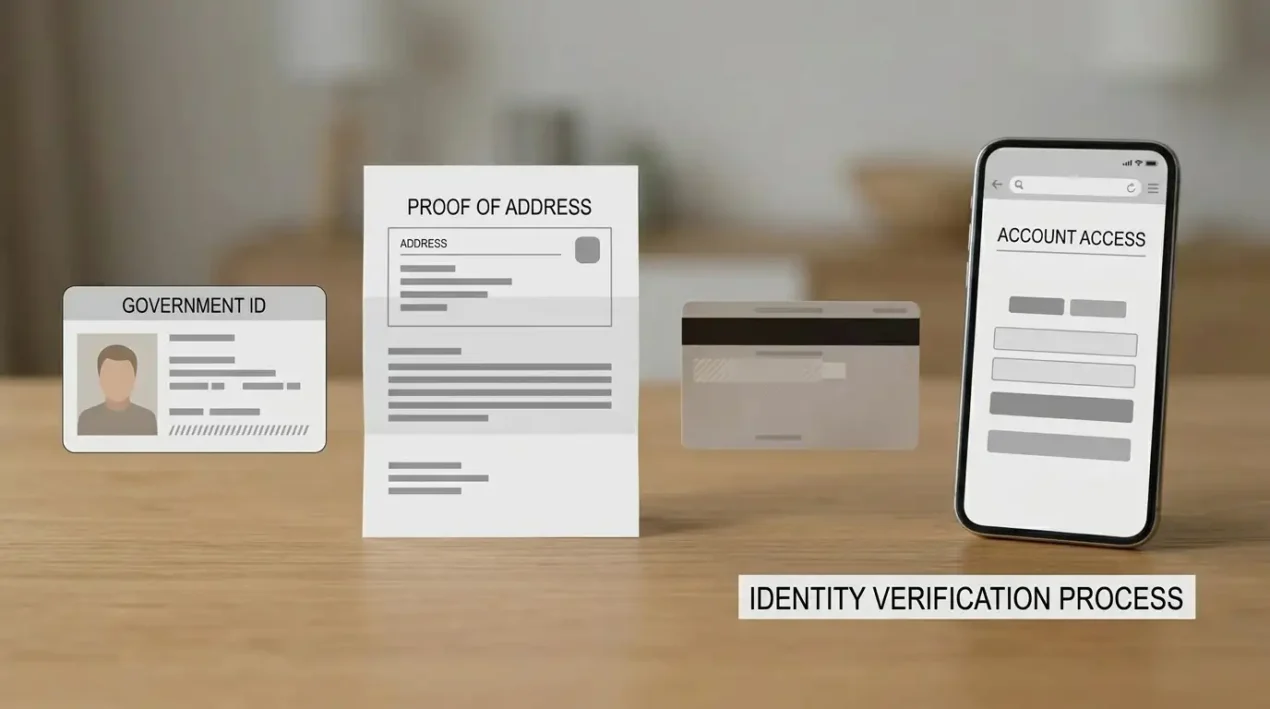
Contents
Stellar Spins uses an identity-check process built around a government photo ID, recent proof of address and, where relevant, copies connected to a registered payment card. The brand says checks usually take 1–48 hours, while higher volumes can extend that window. The account rules also limit each player to one account, and the product includes deposit limits plus temporary and permanent account-control options.
The stated verification window is 1–48 hours
Stellar Spins says identity verification usually takes between one and 48 hours. It also says processing can take longer when verification volumes are high. That range should be read as the operator’s stated processing window rather than a guaranteed completion time for every account.
The practical consequence is that verification is not a single fixed-duration event. A complete file can still sit inside a queue, and the operator’s own range spans from the same day to two days before accounting for periods of heavier demand. The timing therefore matters most when a person expects an account action to depend on the check being complete.
Document quality and queue volume are separate ideas. The published timing does not say that every document submitted at the start of the window will automatically be accepted, nor does it create a promise that a review will finish at the short end of the range. It is better understood as the service level the brand describes for a typical review.
This timing connects directly with the withdrawal guide, because identity review and cashout processing are distinct stages. A stated payout estimate should not be treated as a substitute for the separate account-check process.
The wide window also changes how timing comparisons should be made. A one-hour completion and a 48-hour completion can both fit inside the same stated range, so a single anecdotal result would not redefine the product rule. The useful benchmark is the full range the operator gives, with the added note that high-volume periods can extend it.
Verification timing is therefore best treated as a dependency rather than a performance score. Until the identity check is complete, later account actions can remain separate from the normal flow. Once it is complete, that does not change the stated withdrawal minimums or weekly cap; those are payment rules covered separately.
One player account is the stated account rule
Stellar Spins limits a player to one account. That makes the account identity itself important: verification is attached to a single player profile rather than a collection of parallel accounts.
For readers comparing account mechanics, this rule is simpler than a tiered household or multi-wallet structure. The product is organised around one profile that carries the player’s identity details, payment relationship and account controls. That also means duplicate profiles can create a terms issue rather than functioning as separate sub-accounts.
- Identity: the verification documents belong to one player profile.
- Payments: card documentation, where requested, is tied to the registered account relationship.
- Controls: deposit limits and account closure options operate at account level.
The one-account rule is also why the broader payments overview is best read alongside account requirements. Funding methods describe how money can move, while the account page describes the identity and control layer attached to that activity.
Keeping those layers separate avoids a common category error. Having several payment methods does not imply that a player has several account identities, and using a different device does not create a second profile. The account rule stays centred on the person, while cards, crypto and other funding rails are methods attached to that account context.
For editorial comparison, that makes the one-account rule a structural fact rather than a convenience feature. It tells readers how the product organises identity and access, while the payment pages explain transaction mechanics and the loyalty page explains how activity is counted for points.
Account controls cover limits, pauses and closure
The Stellar Spins FAQ lists deposit limits, temporary deactivation and permanent closure or self-exclusion through support as account-control options. These controls address different levels of intervention rather than doing the same job under different names.
- Deposit limits put a boundary on incoming gambling funds while the account remains active.
- Temporary deactivation provides a pause without describing the account as permanently closed.
- Permanent closure or self-exclusion is the strongest account-level stop listed by the brand and is handled through support.
The distinction matters because a financial limit, a temporary pause and permanent closure respond to different situations. A deposit limit changes the amount that can be funded; a deactivation changes access for a period; permanent closure or self-exclusion is intended to stop continued account use.
These controls should not be treated as a guarantee that gambling cannot cause harm. Gambling can result in loss of money, and people who want independent help can contact Gambling Help Online at gamblinghelponline.org.au or 1800 858 858.
The three control types also differ in reversibility. A deposit limit changes funding boundaries, a temporary deactivation is framed as a pause, and permanent closure or self-exclusion is the strongest stop in the list. Treating them as separate tools makes the account-control menu easier to understand without assuming that one option automatically substitutes for another.
Support involvement is relevant for the permanent option because the brand describes closure or self-exclusion through support. That makes it different from a passive information setting: it is an account-level intervention tied to the support process rather than merely a display preference.
Mobile access is built around the browser
Stellar Spins uses a browser-based mobile format. Its current product information says a native app download is not required, so the mobile experience is centred on opening the service through a phone or tablet browser.
That design keeps the account context aligned across desktop and mobile because the same account, verification state and account controls sit behind the web interface. Mobile access therefore changes the screen and interaction format rather than creating a separate account type.
For account management, the main implication is continuity: identity checks, payment relationships and responsible-gambling controls belong to the account itself, not to a particular device installation. The product can be reached through a mobile browser without introducing a second app-specific profile.
This is why mobile access does not need its own thin product page here. It matters as part of the account experience, especially for document handling and account controls, but it does not replace the underlying verification or payment rules.
Browser-based access also means the important comparison is functional rather than app-store based. The question is whether the account tasks themselves remain available in a mobile browser: checking account state, reaching controls and working with the same profile. The current product description places mobile use inside that browser model instead of defining a separate native-app environment.
The document set maps to three verification checks
The verification list contains three document types with different roles. A government photo ID establishes the person behind the account, proof of address connects that identity with a current residence, and registered-card copies can be requested where card use makes them relevant.
| Document | Stellar Spins requirement | Practical role |
|---|---|---|
| Government photo ID | Used for identity verification | Links the account to a named person and photo-bearing identity document |
| Proof of address | No older than three months | Connects the account identity with a recent residential record |
| Registered-card copies | Requested where applicable | Connects a card-funded account with the registered payment instrument |
The three-month age limit is the most specific document condition in the list. A proof-of-address document can be genuine yet still fall outside that recency requirement, so document type and document age are separate checks.
“Where applicable” is equally important for card copies. It does not turn the card document into a universal requirement for every payment route; it links the request to situations in which a registered card is relevant. That distinction prevents a card-specific step from being mistaken for a rule that applies identically to every funding method.
The Cosmic Missions guide covers the separate loyalty layer. Verification establishes the account identity; the loyalty system then applies its own points logic by game category.
Questions about Stellar Spins verification
What documents does Stellar Spins ask for?
The verification process uses a government photo ID, proof of address no older than three months, and registered-card copies where applicable.
How long does Stellar Spins say verification takes?
Stellar Spins says verification usually takes 1–48 hours and can take longer when review volumes are high. That is a stated range rather than a guaranteed completion time.
Can one player have more than one Stellar Spins account?
No. The stated account rule is one account per player.
What account-control options does Stellar Spins list?
The brand lists deposit limits, temporary deactivation, and permanent closure or self-exclusion through support.
Does Stellar Spins require a mobile app?
No app download is required for the current browser-based mobile format.
Verification preparation comes down to documents and timing
The account process is defined by a short document set and a broad stated timing window. Photo ID, recent proof of address and card copies where relevant cover the identity, residence and payment-instrument checks, while the brand’s 1–48 hour range sets expectations without guaranteeing an exact completion time. The one-account rule and the listed limit, pause and closure controls then sit around that same account profile on both desktop and mobile browser access.
This material was created by the Stellar Spins Notes team.
Related posts
Stellar Spins withdrawal limits and cashout rules

Stellar Spins payment methods and deposit setup